Bridgewater homes built before the 1990s often have rigid metal duct runs that collect years of fine silt from the Raritan River valley plus seasonal pollen from Duke Farms grounds. When temperatures swing from summer humidity to winter heating, that buildup restricts airflow and forces systems to run longer. Same day service lets technicians reach the main trunk lines through existing access points in basements common to Finderne split-levels before the next weather front arrives.
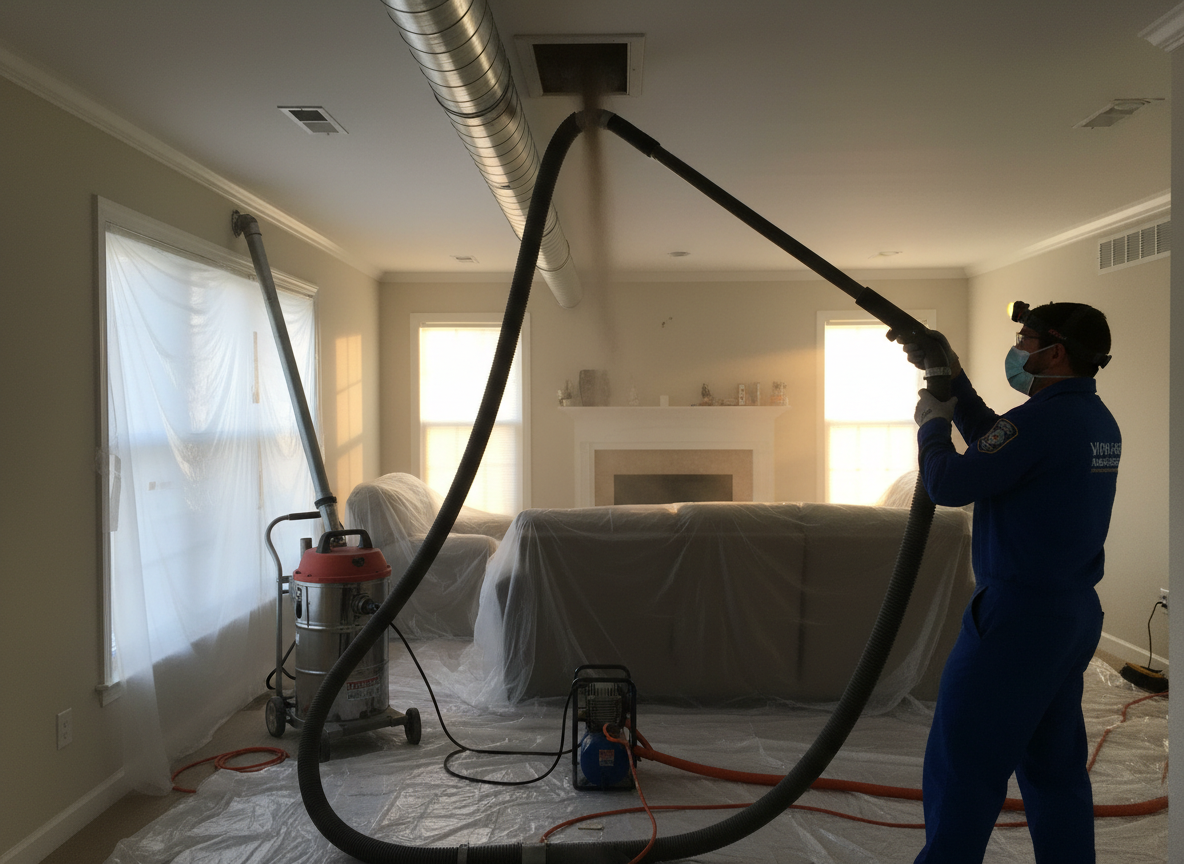
Somerset County properties near Somerville and Raritan sit on clay-heavy soil that holds moderate precipitation longer than sandy areas, raising basement humidity that travels into return ducts. A same day visit starts with camera inspection to confirm no collapsed flex runs or blocked registers from construction dust around Bridgewater Commons redevelopment zones. Technicians then use negative-air machines sized for the home's square footage to pull debris without pressurizing the living space.
Four distinct seasons mean Bridgewater residents run both furnaces and central air within the same week during shoulder months, pushing dust through every branch line. Same day crews focus first on the plenum and main supply runs where most accumulation occurs in Martinsville colonials. After cleaning they reinstall registers and test static pressure to confirm the system moves air at the original design rate rather than leaving hidden restrictions that show up only after the next heating cycle.
Technician insight
In Bridgewater the thing that catches most people out with same day air duct cleaning is the older Martinsville homes where clay soil and moderate winter precipitation keep crawl spaces damp, so ducts sitting low collect moisture that turns fine dust into a sticky layer that needs extra agitation passes before the vacuum can clear it.
Finderne Split-Level with Restricted Returns
Homeowners in Finderne called for same day service after noticing weak airflow on the second floor during the first cold snap. Inspection showed the main return trunk partially blocked by compacted construction dust from nearby Bridgewater Commons work plus pollen tracked in from Duke Farms visits. Crew isolated the system, ran rotary brushes through the low crawl-space lines, and extracted the material with negative air before restoring full airflow the same afternoon.
How it works
- 1
Initial Assessment
Technician arrives at the Bridgewater address and maps every accessible trunk and branch line using a camera scope before any equipment is set up.
- 2
System Isolation
Registers are sealed and the furnace or air handler is isolated so negative pressure pulls debris only through the duct network.
- 3
Mechanical Cleaning
Rotary brushes and compressed air tools dislodge buildup while the vacuum unit captures material at the main trunk in the basement or crawl space.
- 4
Final Verification
Post-clean camera footage confirms lines are clear and static pressure is rechecked before the system is returned to normal operation.
Pricing
Upfront quotes based on number of stories and linear feet of accessible ductwork.