Bridgewater homes, especially those in Finderne and Martinsville, often feature forced-air systems installed decades ago that collect pollen, dust and moisture residue during the area's four distinct seasons. Moderate precipitation keeps particles damp enough to stick inside trunk lines and branch runs, reducing airflow and pushing allergens back into living spaces near Bridgewater Commons and Duke Farms. Older ranch and split-level houses common in these neighborhoods have longer duct runs that trap debris where registers meet exterior walls, making access points critical during any cleaning job.
Somerset County properties near Somerville and Raritan face extra challenges from tree pollen in spring and leaf debris in fall that enters through attic intakes and crawlspace returns. These conditions create layered buildup that standard vacuuming misses, particularly in homes with original sheet-metal ducts that have settled seams. Technicians working from 270 US-202 know to check for disconnected flex runs in Martinsville crawlspaces before starting, because those gaps let cleaned material escape into living areas instead of being captured.
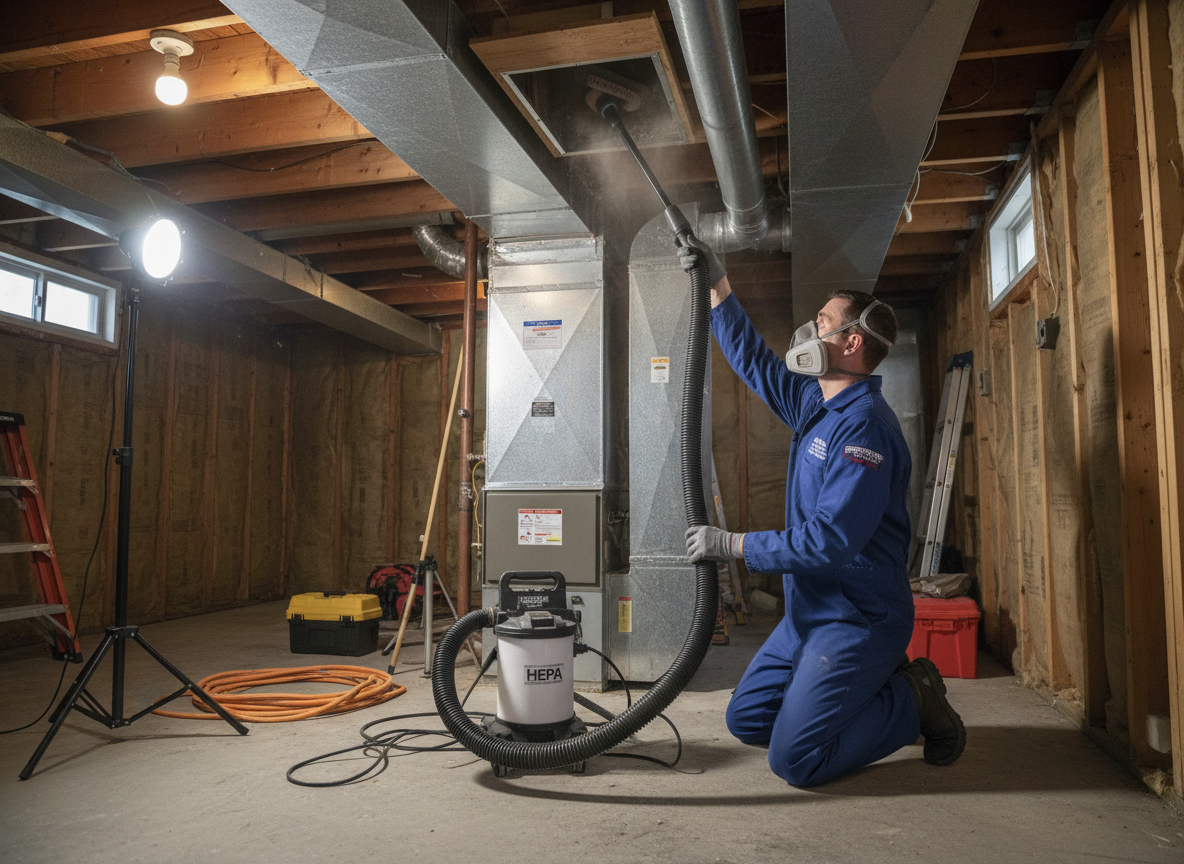
Four-season weather patterns here mean winter heating cycles dry out accumulated dust while summer humidity encourages light mold growth on cooler duct surfaces. Residential jobs require negative-pressure equipment to pull debris through the entire system without pushing it into finished rooms. Crews typically map every register and return in Bridgewater homes first, because missed branches near Duke Farms estates often hold the heaviest pollen loads from surrounding open land.
Technician insight
In Bridgewater, the thing that catches most people out with Residential Air Duct Cleaning is how moderate precipitation combines with spring pollen around Duke Farms to create a sticky film inside pre-1990s ducts in Finderne and Martinsville homes; missing those settled seams during mapping leaves residue that reactivates every time the system cycles.
Martinsville Split-Level With Spring Allergies
Homeowners noticed increased dust on surfaces each time the heat ran. Inspection revealed heavy pollen layers in long return runs connected to an attic intake near open fields. Negative-pressure cleaning cleared the trunk and branches, restoring airflow and reducing visible dust after the next heating cycle.
How it works
- 1
System Mapping
Locate every supply and return in the Bridgewater home, noting runs that extend into Finderne or Martinsville additions.
- 2
Access Point Setup
Create entry points at trunk lines and returns while protecting floors and furniture from dislodged material.
- 3
Negative Pressure Cleaning
Run HEPA vacuum through the full duct network to capture pollen and dust stirred by seasonal weather changes.
- 4
Register and Vent Detail
Brush and vacuum each vent to remove residue that re-enters rooms during heating and cooling cycles.
- 5
Final Airflow Check
Verify restored airflow and confirm no debris remains in the system before leaving the property.
Pricing
Pricing varies by number of runs, home size and access difficulty in older Bridgewater properties; request an upfront quote based on inspection.