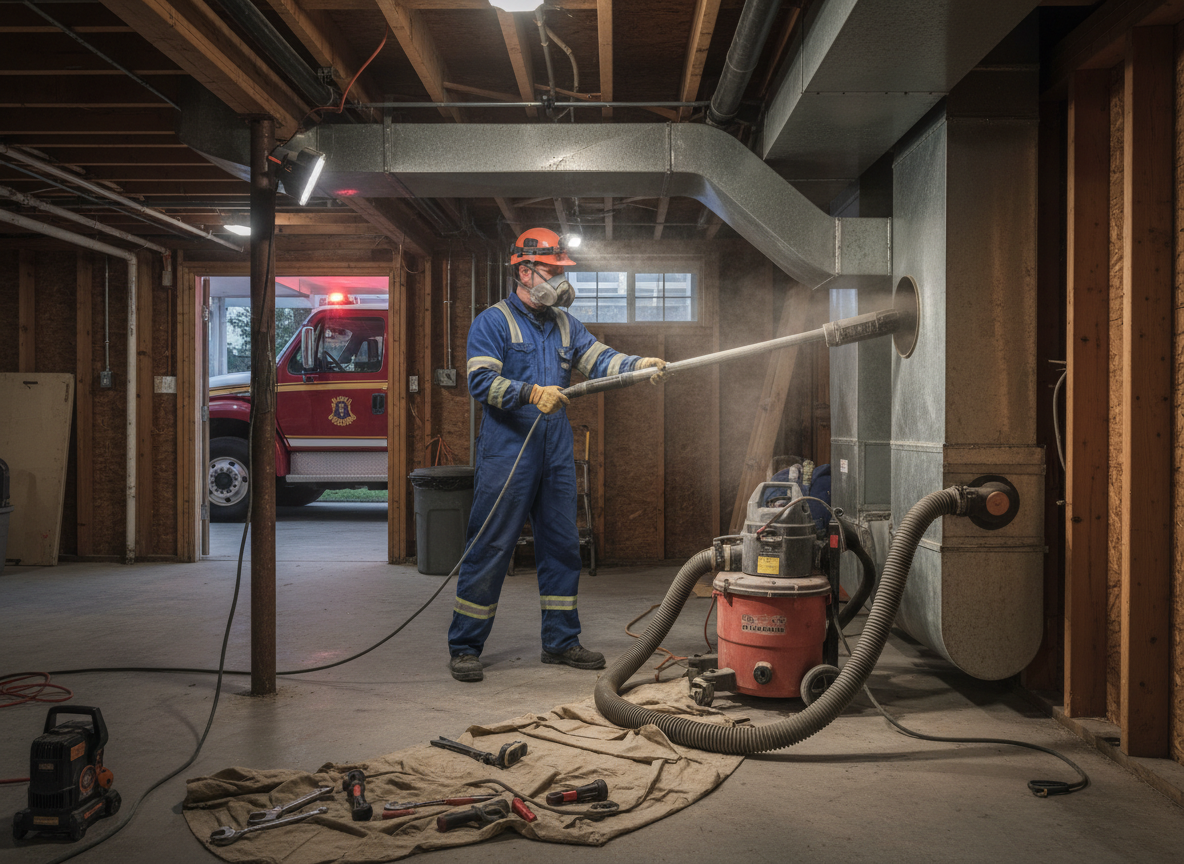
Bridgewater homes in Finderne and near the Raritan line often feature duct runs installed decades ago that trap pollen and fine silt carried in during moderate spring rains or fall leaf decay. When heating or cooling kicks on after a quiet period, those deposits can release all at once, triggering breathing problems or uneven airflow that residents notice within hours. Emergency calls here usually trace back to older flex duct sections that sag or collect moisture in unconditioned attics common on the rolling terrain west of Bridgewater Commons.
Four distinct seasons mean rapid temperature swings that force systems to run harder, loosening accumulated dust in Martinsville split-levels and pushing it into living spaces. Technicians arriving from the 270 US-202 shop carry portable HEPA negative-air machines sized for tight Somerset County crawlspaces rather than large commercial units. They also check for disconnected boots at registers, a frequent failure point in homes built before modern code updates, because loose connections turn a routine seasonal clean into an immediate health concern.
High-velocity cleaning on older metal ducts risks denting or separating joints if the operator does not first map the run with a camera, especially in the compact mechanical rooms found in many Bridgewater townhouses. After moderate summer storms, standing water in low-lying yards near Duke Farms can raise indoor humidity enough to promote surface mold inside return plenums, requiring targeted agitation and extraction instead of simple brushing. Homeowners who attempt DIY vacuuming often push debris deeper into branch lines that only reach the main trunk during a full negative-pressure job.
Response teams dispatched 24/7 prioritize containment first so loosened material does not migrate into finished spaces during the work. They document every accessible section before and after, noting any crushed or kinked flex that restricts flow in the steeper rooflines typical around Somerville Road. This approach prevents repeat calls when the next cold snap or pollen spike arrives.
Technician insight
In Bridgewater, the thing that catches most people out with Emergency Air Duct Cleaning is the brittle flex duct common in Finderne ranches built before 1980; one aggressive pass with the whip and the inner liner tears, turning a two-hour job into a full replacement that homeowners did not expect.
Sudden airflow loss after first spring warm-up
A Martinsville split-level lost airflow through several bedrooms once the system switched from heating to cooling. Camera showed a collapsed flex section packed with winter dust and pollen that had settled during the quiet months. The crew isolated the run, replaced the damaged flex, and completed negative-pressure cleaning on the remaining trunk. Airflow returned evenly and the homeowner reported no further odor or dust release during the next temperature swing.
How it works
- 1
Phone Assessment
Gather symptoms, home age, and recent weather events while dispatching a truck from the 270 US-202 location.
- 2
On-Site Containment
Set up sealed entry points and negative pressure to protect living areas in Finderne or Martinsville homes.
- 3
Camera Inspection
Map every accessible run to locate collapses or heavy buildup before any agitation begins.
- 4
Agitation and Extraction
Use brushes and compressed air under constant vacuum to remove debris without damaging older duct joints.
- 5
Final Verification
Re-inspect with the camera and confirm restored airflow before leaving the property.
Pricing
Emergency response after regular hours or on weekends reflects added crew availability and travel across Somerset County roads.